
Strategic Location
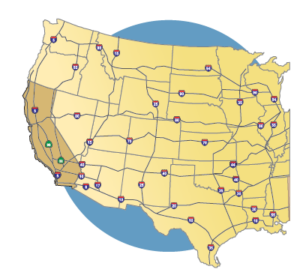
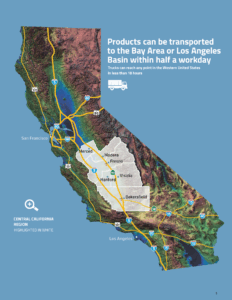
Few regions are better positioned to move goods throughout California and the western United States than Central California. Located between the Los Angeles and Bay Area markets, the region is anchored by Interstate 5 and Highway 99—two of the state’s most important north-south freight corridors—providing efficient access to nearly 40 million California consumers. East-west highways connect Central California with the coast, major seaports and inland markets throughout the West. The region is also served by both Union Pacific and BNSF Railway, multiple commercial and cargo-capable airports, intermodal facilities and a growing network of modern distribution centers. This combination of market access, transportation infrastructure, available industrial land and comparatively lower operating costs continues to drive investment in warehousing, distribution, e-commerce, cold storage and transportation-related operations.

All Access to Central California
Seaports
Central California provides efficient access to California’s major international maritime gateways—the Ports of Los Angeles, Long Beach and Oakland. The Port of Oakland is especially important to the region’s agricultural exporters, while the Southern California ports offer extensive global container service. The inland Port of Stockton provides additional road, rail and deep-water shipping capabilities for bulk, breakbulk, liquid and project cargo.
Airports
The region is supported by a network of commercial, cargo and general-aviation airports. Fresno Yosemite International Airport provides domestic and international passenger service, daily FedEx and UPS cargo operations and on-site U.S. Customs and Border Protection services. Meadows Field, Stockton Metropolitan, Merced Regional and Castle airports provide additional passenger, air-cargo, corporate-aviation and industrial-development capacity.
Freeways and Highways
Interstate 5 and State Route 99 form the backbone of Central California’s north-south transportation network, connecting businesses with the Los Angeles, Sacramento and San Francisco Bay Area markets. Major east-west routes—including State Routes 58, 120, 132, 152, 180 and 198—provide connections to coastal ports, the Inland Empire, the Sierra Nevada and markets throughout the western United States.
Freight Rail
Central California is served by both Union Pacific and BNSF Railway, providing access to two of North America’s largest freight rail networks. The San Joaquin Valley Railroad and other local rail operators connect businesses and industrial properties with these Class I carriers. This network supports the movement of agricultural commodities, food and beverages, energy products, construction materials, manufactured goods and consumer products.
Intermodal Facilities
Central California offers intermodal access at both ends of the San Joaquin Valley. In the north, BNSF’s Stockton Intermodal Facility and Union Pacific’s Lathrop Intermodal Terminal connect regional businesses with ports and markets throughout North America. In the south, the Wonderful Logistics Center in Shafter is developing an international rail terminal with dedicated shuttle service to the Ports of Los Angeles and Long Beach. Regional transload and rail-served facilities provide additional options for transferring products between trucks and trains.
Distribution and Logistics Infrastructure
Central California’s location, transportation network, available industrial land and competitive operating costs have supported substantial growth in distribution, fulfillment, cold-storage and food-logistics operations. Modern logistics centers throughout the region allow companies to reach California’s major population centers, international ports and western markets while maintaining room for future expansion.